Friday, July 1, 2011

Meet The Man Who Claims He Turned In Infamous Hacker Group


Halethorpe Man Spills Secrets of International Cybercrime Takedown

He is slender, with steel-gray eyes and close-cropped light brown hair. He looks even younger than his 22 years, belying his experience in the world of high-stakes cybercrime
Mike Major, Jr., of Halethorpe calls himself a “gray hat” hacker–neither clearly a good guy nor a bad guy, but one who navigates the virtual realm of cybercrime guided by his own internal sense of justice.
“I do whatever I feel is right at the time,” he said.
Major said he has no regrets–or fear of reprisals–for his role in disrupting the international hacking group Lulz Security, orLulzSec, which claims responsiblity for attacks on several high-profile government and corporate web sites.
Known online as “Hann,” Major said he and a friend known as “m_nerva” leaked chat room transcripts of cybercrime discussions that led to the June 20 arrest of 19-year-old Ryan Cleary of Essex, U.K., and the seizure of web servers in a Federal Bureau of Investigation raid on a Virginia Internet provider.
Hann and m_nerva, members of a hacking group called Team Poison, released personal identifying information on the half-dozen core members of LulzSec, including real names and addresses, phone numbers and IP addresses that allowed law enforcement agencies to trace their activities over the internet, Major said.
“We have their family relationships, workplace information, everything,” said Major, who spoke publicly of his role for the first time, with the condition that his face not be shown.
He said most of the half-dozen core LulzSec members are in custody or on the run. One raid was made Thursday by the FBI on the home of an Ohio man, according to the Wall Street Journal. 
Declaring War on Governments, Corporations
An offshoot of the notorious hacking group Anonymous, LulzSec rose to prominence in May, taking credit for attacks on several media and online gaming sites.

In May, LulzSec took responsibility for attacks on Fox.com, reportedly because the rapper Common was called "vile" on the Fox News Channel. The group claims on its web site to have stolen passwords and the names of 73,000 X Factor contestants.
On May 29, LulzSec claimed to have been the perpetrators of a hacking of the Public Broadcasting Corporation site with a story supposedly by PBS reporting that Tupac Shakur is still alive in New Zealand.
In early June, LulzSec said it hacked Sony, stealing valuable source code and private account information on thousands of users, and Nintendo.com.
The hackers claim they hack for the “lulz”–for fun–and also to point out security vulnerabilities in networked systems, according to statements attributed to the group on Twitter and posted to theLulzSec web site.
Hackers tend to operate in elusive groups, and their tools, or “firepower” as Major called it, are traded or sold in secret online venues.
“The [hacking] community feels you do it for financial gain or for moral reasons,” he said.
LulzSec engaged in “hacktivism” in which cybercrime is used to make political and social statements, says Richard Forno, director of the cybersecurity graduate program at the University of Maryland Baltimore County.
In early June, LulzSec reportedly embarked on a campaign of high-profile hacks, including attacks on government sites in Brazil and the Serious Organised Crime Agency (SOCA), the U.K.'s version of the FBI.
Within the U.S., LulzSec claimed responsibility for hacking the site of an FBI affiliate and taking down the web site of the Central Intelligence Agency. On June 13, LulzSec hacked the web site of the U.S. Senate, according to news reports.
The group reportedly released a lode of confidential information about Arizona law enforcement officials, including the names of undercover agents, in a project called “Operation Chinga La Migra.”
LulzSec taunted its victims and law enforcement through Twitter and statements released on its web site. It declared cyberwar on governments and corporations via Twitter.
"They were taking it too far," Major said. "A lot of us thought so. Taking down the CIA web site for publicity is just media-whoring."
"I Have No Fear of These Kids"
Major explained that hackers congregate in online chat rooms known as internet relay chat (IRC). Typically, a hacker will use a "proxy" or a virtual connection established on a vulnerable computer found over the internet. The computer owner often has no idea that his space and bandwidth is being borrowed for illegal activity.

Using a virtual space on somebody else's computer allows a hacker to disguise his IP address. Even better, Major explains, is borrowing a computer beyond the convenient reach of law enforcement in an eastern European nation or a country like Switzerland, where laws protect private information such as IP addresses.
By the time law enforcement has the information, the digital trail has long since evaporated.
Major said that Cleary was a dupe used by LulzSec to host its IRC chats. Team Poison used Cleary to record conversations and unmask IP addresses of LulzSec members, he said.
On June 21, LulzSec outed Major and m_nerva by posting personal information at Pastebin, a site where people can share clips of code or text. LulzSec posted real names, home addresses and IP addresses.
M_nerva "was involved in the hacking of the game 'Dues Ex' and was/is involved in countless other cybercrimes," LulzSec posted in a message directed at "FBI and other law enforcement clowns."
"Also, he tried to snitch on us. Therefore we just did your job for you with great ease," they said. "This moron is trying to flee the country in order to avoid serious punishment. Hunt him down."
About Major, SulzSec said, "[H]e's also wanted for some pretty heavy stuff."
Major maintains he has done nothing wrong. "I haven't broken any laws,” he said. “I have nothing to worry about." He said he has not been questioned by the FBI or law enforcement.
Several members of LulzSec have been questioned or taken into custody. Others are on the lam or have merged back into Anonymous, according to Major.
On June 25, LulzSec announced that it was disbanding and ending what it called "50 Days of Lulz."
Major said he has no regrets about making waves in the hacking world. "I was more than happy to do it," he said. "I was fighting for the good guy."
He denies being worried about reprisals. "I have no fear of these kids," he said. "These guys are complete idiots. They can't touch me here or online. What are they going to do, charge down my driveway and beat me up?"
Forno said that the LulzSec episode speaks volumes about the vulnerability of the online world as people around the globe increasingly rely on digital devices and are networked in their  everyday lives.
"The question is, how were they able to get in?" Forno said."Attacks and incidents like this show how complacent we are in an internet-dependent society. It shows how much we're not doing in the way of security."

Google Street View Suit: WiFi 'Snooping' Case To Proceed, Judge Rules


Google Street View Suit
By Andrew Longstreth

NEW YORK (Reuters) - Google Inc can be sued for allegedly violating federal wiretap law in a lawsuit over the data collection methods of its Street View cars, a judge has ruled.
U.S. District Judge James Ware in San Francisco late Wednesday rejected Google's request to dismiss the lawsuit.
Individual plaintiffs from various states have accused the giant search engine company of intentionally intercepting data from personal wireless networks for its Street View vehicles. Their lawsuit seeks class-action status.
Google's Street View cars take panoramic pictures of city streets. The company disclosed in May that the cars had inadvertently collected data from unsecured wireless networks in more than 30 countries, prompting regulatory investigations.
The plaintiffs alleged that Google used vehicles for its Street View operation to collect and analyze various types of information from their wireless connections, including personal emails, passwords, videos, and documents.
Ware ruled that the plaintiffs had sufficiently stated a claim for a violation of the federal Wiretap Act, allowing them to continue to press their case in court.
However, the judge granted Google's request to dismiss part of the lawsuit. He threw out a claim by the plaintiffs for alleged violations of various state wiretap statutes and a claim under California's unfair competition statute.
"We believe these claims are without merit and that the court should have dismissed the wiretap claim just as it dismissed the plaintiffs' other claims," Google said in a statement. "We're still evaluating our options at this preliminary stage."
The case is in re Google Inc. Street View Electronic Communications Litigation, U.S. District Court, District of Northern California, No. 10-MD-02184.
(Reporting by Andrew Longstreth, editing by Gerald E. McCormick)

Google+ Made Unavailable In China: REPORT


Google China

Google+, the search giant's social network, has already been made unavailable in China.
According to Great Firewall of China, a China-based service that checks the availability of sites within the country, Google+ has been made inaccessible just a day after its debut. Sites including Facebook, Twitter, YouTube and Foursquare are already blocked in the country, which has a famously restrictive censorship policy over its Internet.
However, China hasn't completely prevented its citizens from accessing the site. According to Penn-Olson, China is not blocking the site, but is throttling the speed of the site so greatly that it may as well be unavailable.
"Web throttling is a tactic new to China’s Great Firewall, and has been seriously slowing pretty much all overseas internet speeds all year," Penn-Olson explains. "Gmail particularly has been horribly throttled, to the point were it can take five or ten minutes or more to go from the login page to your inbox. It’s a very underhanded tactic [...] [that is] actually rendering it [the service] nearly useless to its users."
Outside of China, demand for Google+ has been so great that the service's invite system was temporarily put on hold Wednesday night.
To learn more about the Google+ project, check out our slideshow of 9 things you need to knowabout the new social network.

Anonymous Launches HackerLeaks: WikiLeaks For Stolen Data


Anonymous
A new website called HackerLeaks, reportedly launched last week by members of hacker-activist collective Anonymous, invites users to submit hacked data for analysis and publication.
Similar to the whistleblower website WikiLeaks, HackerLeaks operatives “receive documents through anonymous submission channel, analyze them, and then distribute them to the press,” Forbes's Andy Greenberg reported on Thursday.
The organization’s official mission statement, available on the HackerLeaks website (here), reads,
“In both security as well as overall strategy, HackerLeaks is closely modeled on WikiLeaks. Our first priority is to provide a safe, secure - and anonymous way for hackers to disclose sensitive information. Our team of analysts first carefully screens each submission for any possible trace of the senders identity. Our second commitment is to ensure that each and every leak receives the maximum exposure possible in order to achieve the most profound political impact for the risks taken by those submitting material. To that end, we work with media outlets all over the world.”
Amidst recent Internet security breaches, independent hackers have been utilizing sites such asPastebin to release compromised data. HackerLeaks, on the other hand, claims to provide an added incentive, offering “maximum exposure and political impact” as a result of such "leaks".
“We just wanted to make our own offering, compete in the disclosure marketplace and maybe fill a unique role if we can,” says a HackerLeaks representative who spoke to Greenberg over instant message.
As of this writing, there has been one anonymous submission to HackerLeaks –– a leak containing personal information of Orlando officials. Time will tell whether or not more hackers will utilize HackerLeaks in order to publicize the data that they’ve taken.
Anonymous has reportedly launched a "war" against the city of Orlando to voice disapproval over the arrests of non-profit workers who distribute food to the homeless without obtaining permits from the city. The group claimed that it will target "city web assets," and apparently downed the Orlando Florida Guide soon thereafter.

LightSquared Wireless Network Could Harm GPS Systems, Tests Show


Lightsquared Gps
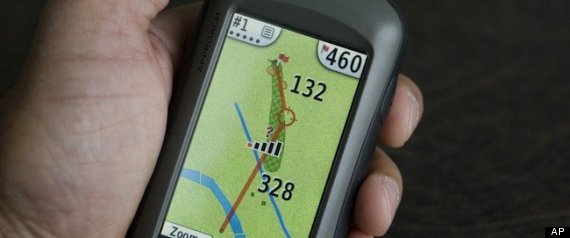
WASHINGTON -- New test results show that a proposed nationwide wireless broadband network would produce significant interference with GPS systems used for everything from aviation to high-precision timing networks to consumer navigation devices. Changes to the proposal could reduce interference, but wouldn't eliminate it.
The findings, based on extensive equipment tests conducted in Las Vegas, increase pressure on the Federal Communications Commission to block a Virginia company called LightSquared from launching the network, which is designed to compete with super-fast systems being rolled out by AT&T and Verizon Wireless.
Although the FCC in January gave LightSquared approval to build the system, the agency said it would not let the company turn on the network until GPS interference problems are resolved. The agency required LightSquared, GPS equipment makers and GPS users to establish a working group to study the matter.
That group filed its report with the commission on Thursday, with the two sides offering different interpretations of the test results.
LightSquared insisted that the interference problems are fixable.
But GPS equipment makers, and companies and government agencies that rely on GPS technology, warn that the planned network would jam their systems because LightSquared would use airwaves close to those already set aside for GPS.
They say that sensitive satellite receivers – designed to pick up relatively weak signals coming from space – could be overwhelmed when LightSquared starts sending high-powered signals from as many as 40,000 transmitters on the ground. GPS signals, they say, will suffer the way a radio station can get drowned out by a stronger broadcast in a nearby channel.
"The FCC needs to consider other options for the LightSquared signals where they do not run up against the laws of physics," said Charles Trimble, co-founder of Trimble Navigation Ltd., which makes GPS systems.
With the working group report complete, the FCC will now seek public comments. The FCC said it will review the report, adding that it has "a long-standing record of resolving interference disputes."
The working group's report follows the release of federal test results that also found significant interference with GPS systems used by a broad cross-section of government agencies, including the Coast Guard, the Federal Aviation Administration and NASA.
Faced with growing GPS industry resistance, LightSquared last week proposed to move some of its operations to a slice of airwaves located farther away from GPS frequencies. It also proposed to transmit signals at lower power levels to ensure that its network would not interfere with most nearby GPS systems.
Most of the testing conducted by the working group was based on the company's original plan to use airwaves next to the GPS band.
The working group said that plan would produce significant, across-the-board interference. Among the findings:
_ GPS systems used for aviation would be unavailable over entire regions of the country at normal aircraft altitudes.
_ GPS receivers built into cellular devices could experience interference at significant distances from LightSquared's base stations – resulting in delayed or inaccurate location readings.
_ Space-based GPS receivers used in NASA science missions could be disrupted.
Although the working group conducted only limited testing based on LightSquared's proposal to use different airwaves, it said the change could reduce problems for some GPS receivers, including those used in aircraft navigation and cellphones.
LightSquared, however, acknowledges that other GPS devices, particularly high-precision receivers used in construction and agriculture, would still experience significant disruption.
LightSquared maintains that the interference is largely a problem of the GPS industry's own making. That's because GPS receivers are picking up signals outside their own bands – in frequencies licensed to LightSquared.
That had never presented a conflict until the FCC provisionally approved LightSquared's wireless broadband network. Until now, that spectrum has been used primarily for satellite communications, with only limited ground-based wireless service to fill coverage gaps. GPS receivers can easily screen that out.
LightSquared, which is based in Reston, Va., also insists the problem can be fixed by installing better filters in GPS devices to screen out its signals. Those filters, LightSquared says, cost as little as 5 cents each.
GPS manufacturers say that solution is speculative because such filters do not yet exist and were not available for testing. They add that although filters might work with some GPS receivers, such as those embedded in cellphones, they would not work in all GPS equipment and could significantly degrade performance and battery life.
Bronson Hokuf, an engineer with GPS maker Garmin Ltd., also said it would be nearly impossible retrofit hundreds of millions of existing GPS devices already in use. The working group said installing new filters in GPS equipment used for aviation, for instance, would be very expensive and could take at least 10 years.
Although the FCC has promised that it won't let the LightSquared network harm GPS systems, it is eager to see the company succeed.
The FCC views the network as one part of a broader government push to free up more airwaves for mobile broadband services to keep up with the explosive growth of online apps, mobile video and other bandwidth-hungry wireless applications.
The agency also hopes LightSquared will help it advance its goal of bringing high-speed Internet connections to all Americans. The company, which plans to wholesale network access to other companies that will rebrand the service under their own names, has pledged to reach 260 million Americans with its coverage by 2015.

Google+ Invite Shutdown: Google Social Network Curbs Sign Ups Due To 'Insane Demand'


Googleplusinvitesocialnetworksignups
If you were among the lucky people given a Google+ invite, treasure it. Though users were previously allowed to invite friends to try out Google's new social network, the search giant has since removed this option.
"We've shut down invite mechanism for the night. Insane demand. We need to do this carefully, and in a controlled way," said Vic Gundotra, Google's head of social. He announced the shutdown on (ironically) his Google+ profile late Wednesday night.
Google+ launched Tuesday to a small group of users and the service was initially invitation only, with users "tapped" by Google to be among the first given just 15 invitations to hand out to others in their social circle. But then users were given the ability to invite anyone Wednesday night, resulting in a high volume of new users.
If you weren't one of the lucky people to gain access, you'll have to wait until the next rollout.
As Venture Beat points out, the demand for Google+ may signal a big victory for the company, whose previous social endeavors have been ignored or chastised. On the other hand, bids for an invitation for the now-defunct Google Wave reached $5,000 on eBay before the item was removed.
It appears that even those who received invites aren't guaranteed access. As usual, people have taken to Twitter to express their frustration.
"Apparently I took to long to use my invite to Google+ and they've rescinded it. Burned!" saidJessica Valenti.

Smartphones Now Outsell Traditional Phones: Nielsen


Smartphone Sales
According to a recent Nielsen survey, smartphones now constitute the lion's share of new phone purchases.
55 percent of those who purchased a new handset in the past three months reported buying a smartphone instead of a feature phone, up from 34 percent just a year ago.
The survey also contains some troubling news for Google's Android OS. Though it continues to be the most popular smartphone operating system, with 38 percent of the smartphone market, iPhone has shown the most growth over the last three months.
Android purchase remained flat at 27 percent between February and May, while iPhone purchases jumped from 10 percent to 17 percent over the same period.
Information Week hypothesizes that the iPhone's growth may be do in large part to two factors. First, that Apple's partnership with Verizon has made the iPhone available to a new set of consumers. Second, that Apple recently made the iPhone 4 available in white.
[via Gizmodo]

iPhone Import Ban Sought By Samsung As Apple Patent Dispute Heats Up


Iphone Import Ban
SEOUL, South Korea -- Samsung Electronics is asking the United States to prohibit Apple from importing key products including the latest iPhone and iPad devices amid an escalating patent dispute.
Samsung filed a complaint with the U.S. International Trade Commission over what it claims are Apple's violation of five patents held by Samsung, the Suwon, South Korea-based company said Thursday. The complaint was filed Wednesday.
"The complaint requests relief in the form of a permanent exclusion order prohibiting entry to the United States of all Apple products in violation of these patents," Samsung said in a statement, adding that the items include the iPhone 4, iPad 2 and iPod Touch.
Though Apple is a U.S. company, many of its products are assembled in China and exported to the United States.
Apple Inc. spokesman Steve Park in Seoul declined comment on the complaint.
Consumers shouldn't worry about being able to buy products. These disputes take months or years to resolve and typically end with payments of licensing fees rather than any import ban.
On June 14, Apple agreed to pay Nokia Corp. a one-time sum to settle their long-standing disputes over patents that cover features such as swiping gestures on touch screens and the built-in "app store" for downloading updated programs. The amount wasn't disclosed.
The action by Samsung is the latest move in a fight that began in April when Cupertino, California-based Apple Inc. sued Samsung Electronics Co. in a California court claiming that Samsung's Galaxy line of smartphones and tablet computers copy its iPad and iPhone.
Samsung responded by filing lawsuits in South Korea, the U.S. and elsewhere alleging patent violations by Apple. Apple then came back last week and filed a lawsuit against Samsung in Seoul Central District Court, taking the battle to the South Korean company's home turf.
Other companies are involved in similar disputes. Apple has sued Taiwan's HTC Corp., one of the leading producers of phones that run on Google Inc.'s Android software, a potential challenger to Apple's popular iPhone. Microsoft Corp. has sued Motorola over Android phones, too.
The disputes highlight the growth of so-called smart devices such as phones and tablets and the intense competition for customers amid the products' soaring popularity spurred by Apple's 2007 launch of the iPhone. Samsung, the world's second-largest manufacturer of mobile phones, got a slower start in smartphones but has been catching up with its Galaxy brand.
Samsung and Apple are not only competitors. Apple, driven by the success of the iPhone and iPad, become the world's largest buyer of chips for computers and phones last year, according to research firm IHS iSuppli.
Samsung, the world's biggest manufacturer of memory chips, declined to say exactly how much it sells to Apple.
"Apple is our competitor, but at the same time it is one of our biggest customers," Samsung spokesman Nam Ki-yung said. "And we can't discuss our customers."
The International Trade Commission is an independent U.S. federal agency that deals with issues that affect trade including dumping, subsidies and safeguards and also judges import cases dealing with intellectual property rights, according to its website.
The commission can order imports of products made with contested technology to be blocked. Disputes are typically resolved in 12 to 18 months.
"We hope the ITC makes a decision as soon as possible," Samsung's Nam said.